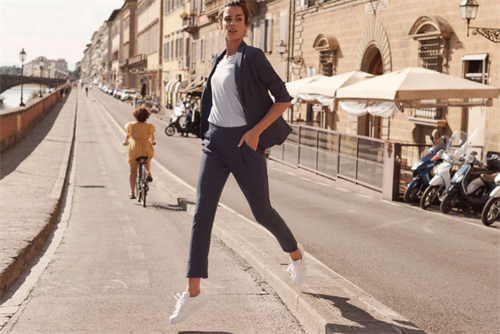
In the realm of portrait photography, the choice of lens focal length is a critical decision that profoundly influences the aesthetic and technical quality of the final image. While a variety of focal lengths can be used to capture portraits, the range of 85mm to 135mm is widely regarded by professionals as the "gold standard" for flattering, high-impact results.
1. Background Blur (Bokeh) and Subject Isolation: Defining the Focal Point
1) How 85mm-135mm Delivers Superior Bokeh:
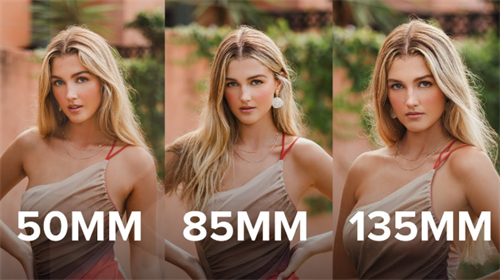
Longer focal lengths inherently create a shallower depth of field (DOF) when paired with equivalent apertures, resulting in more pronounced background blur (bokeh). For example, an 85mm f/1.8 lens produces significantly softer, more diffused backgrounds than a 50mm f/1.8 lens when shooting from the same distance. This is because the longer focal length "stretches" the perspective, causing out-of-focus elements to blend into a smooth, aesthetically pleasing blur—ideal for minimizing distractions like cluttered backgrounds, harsh lines, or inconsistent lighting.
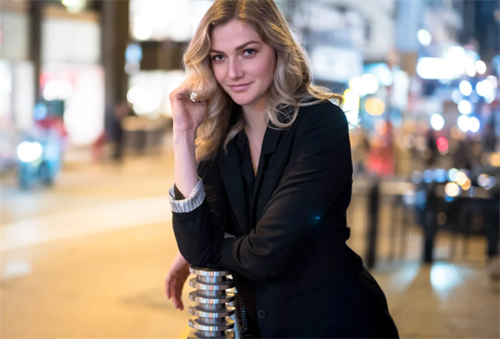
Beyond bokeh intensity, the 85mm-135mm range offers spatial compression, a phenomenon where distant background elements appear visually closer to the subject. This compression simplifies the composition by reducing the visual "noise" of the environment; for instance, a row of trees or a city skyline behind the subject will merge into a cohesive, unobtrusive backdrop rather than competing for attention. This effect is particularly valuable in outdoor settings (e.g., parks, urban streets) where controlling the background is challenging.
2) The Limitations of 50mm for Background Isolation:
While 50mm lenses can produce mild bokeh at wide apertures (e.g., f/1.4 or f/1.8), their shorter focal length limits both blur intensity and compression. To achieve a similar framing to an 85mm lens (e.g., a half-body shot), a 50mm user must stand much closer to the subject. This shorter distance increases the DOF relative to the subject’s size, leaving background elements more defined—often resulting in a cluttered, less polished look.
For example, if shooting a portrait in a busy café, a 50mm lens might retain recognizable details of nearby tables or patrons, while an 85mm lens would blur those elements into a soft, neutral backdrop.
2. Perspective Distortion: Preserving Natural Facial Proportions
One of the most critical challenges in portrait photography is avoiding perspective distortion—an optical effect where close-up shooting distances exaggerate facial features (e.g., noses, foreheads) while shrinking distant features (e.g., jaws, ears). The 85mm-135mm range eliminates this issue, making it the ideal choice for capturing lifelike, flattering portraits.
1) Why 85mm-135mm Minimizes Distortion?
Perspective distortion is primarily caused by shooting distance, not the lens itself. Longer focal lengths require photographers to stand farther from the subject to achieve the same framing—typically 2–4 meters for half-body or close-up shots. This distance aligns with the "natural perspective" of human vision for facial recognition; our eyes perceive faces most accurately from a similar range, so the resulting images feel intuitive and true-to-life.
For example, when shooting a head-and-shoulders portrait:
An 85mm lens requires a distance of ~2.5 meters, preserving balanced proportions—no exaggerated noses or flattened cheeks.
A 135mm lens, used from ~3.5 meters, further refines this by softening minor facial asymmetries (e.g., a slightly wider jaw) without making the subject appear "compressed" or unnatural.
This is especially critical for professional applications like commercial portraits, weddings, or fashion shoots, where accuracy and flattery are non-negotiable. Even subjects with distinct facial features (e.g., prominent cheekbones, a long nose) will appear balanced and approachable in images taken with 85mm-135mm lenses.
2) The Risk of Distortion with 50mm
A 50mm lens is often praised for its "human eye" perspective, as its field of view roughly matches what the naked eye perceives. However, this advantage disappears when shooting close-ups. To frame a head-and-shoulders shot with a 50mm lens, the photographer must stand just 1–1.5 meters from the subject—well within the range where distortion becomes noticeable.
3) Common issues with 50mm close-ups include:
Exaggerated foreheads and noses (features closest to the lens).
Shrunken, "receding" jaws or ears (features farther from the lens).
A "fish-eye" effect around the edges of the face (e.g., widened cheeks).
These distortions can make subjects look unnatural or unflattering, even if the composition is strong. While experienced photographers can mitigate this by adjusting the subject’s pose (e.g., tilting the chin down to reduce nose prominence), this adds complexity to the shoot and limits creative flexibility—something the 85mm-135mm range avoids entirely.
3. Shooting Distance: Balancing Interaction and Comfort
The distance between photographer and subject directly impacts two key factors: the subject’s comfort and the photographer’s ability to direct. The 85mm-135mm range strikes a perfect balance here, while 50mm often forces an awkward, intrusive shooting dynamic.
1) The Sweet Spot of 2–4 Meters
-Subject Comfort: Standing 2+ meters away eliminates the "intimidation factor" of a lens held just 1 meter from the subject’s face. Subjects are less likely to feel self-conscious or tense, leading to more natural expressions (e.g., relaxed smiles, genuine gazes). This is especially valuable for shooting children, shy individuals, or anyone unaccustomed to being photographed.
-Photographer Flexibility: The distance gives photographers room to adjust their position, use props, or guide the subject’s pose without invading personal space. For example, a photographer using a 105mm lens can step slightly left/right to frame the subject against a better background, or gesture to adjust the subject’s hair—all while maintaining eye contact and rapport.
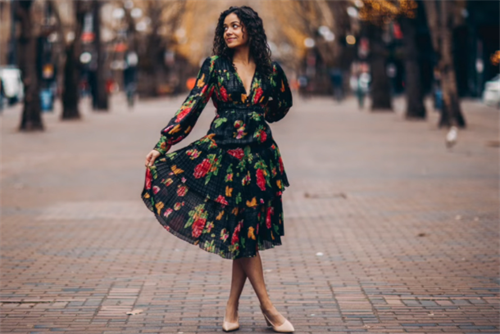
-Environmental Integration: At 2–4 meters, it’s easier to incorporate subtle environmental elements (e.g., a window, a flower bush) into the composition without overwhelming the subject. This adds context to the portrait while keeping the focus on the person.
2) The Discomfort of Close-Range 50mm Shooting
To match the framing of an 85mm lens, a 50mm user must stand 1–1.5 meters from the subject—often within the "personal space" bubble (1.2 meters is typically considered the boundary of intimate distance in Western cultures). This proximity can:
Make subjects feel anxious or "on edge," leading to forced expressions (e.g., stiff smiles, avoidant eye contact).
Restrict the photographer’s movement; adjusting pose or composition requires leaning in or stepping back repeatedly, which can disrupt the flow of the shoot.
Limit environmental context; at 1 meter, the background is often too close to include meaningful details without cluttering the frame.

4. Image Quality: Sharpness, Consistency, and Optical Excellence
1) Why 85mm-135mm Lenses Excel at Image Quality?
-Edge-to-Edge Sharpness: Even at wide apertures (e.g., f/1.4 or f/1.8), 85mm-135mm lenses maintain exceptional sharpness across the frame—critical for capturing details like eyelashes, skin texture, or subtle facial expressions. For example, a Sony FE 85mm f/1.4 GM lens delivers 90%+ sharpness at the edges of the frame when wide open, while many 50mm lenses struggle to maintain 70% sharpness in the same conditions.
-Minimal Optical Flaws: Long focal lengths reduce common issues like chromatic aberration (color fringing around high-contrast edges) and vignetting (darkened corners). This is because the lens elements are designed to focus light more precisely over a narrower field of view. For instance, a Canon RF 135mm f/1.8 IS USM lens uses specialized low-dispersion glass to eliminate chromatic aberration, ensuring clean, natural skin tones.
-Smooth Bokeh Transition: The optical design of 85mm-135mm lenses creates a gradual transition between in-focus and out-of-focus areas (known as "bokeh roll-off"). This avoids the "harsh" or "busy" bokeh that can occur with 50mm lenses, where the transition between sharp and blurred regions is more abrupt.
2) The Limitations of 50mm Image Quality:
-Edge Sharpness at Wide Apertures: Many 50mm lenses suffer from soft edges when shot wide open (e.g., f/1.4). This means the subject’s eyes might be sharp, but their ears or hairline could appear slightly blurred—requiring post-processing to correct.
-Chromatic Aberration: Shorter focal lengths are more prone to color fringing, especially when shooting high-contrast scenes (e.g., a subject against a bright sky). This can create unwanted purple or green halos around facial features, which are time-consuming to fix in editing.
-Vignetting: Compact 50mm lenses (e.g., "pancake" designs) often have noticeable vignetting at wide apertures, which darkens the corners of the frame and draws attention away from the subject.
3) 85mm: The "King of Portrait Lenses"
Within the 85mm-135mm range, the 85mm focal length stands out as the most versatile and widely beloved—earning it the nickname "King of Portrait Lenses." Its popularity stems from a unique blend of performance, practicality, and accessibility.
4) Why 85mm Reigns Supreme?
-Perfect Perspective Balance: 85mm avoids the "flat" look of longer focal lengths (e.g., 135mm) while eliminating the distortion of shorter lenses. It captures facial proportions naturally while still offering enough compression to simplify backgrounds.
-Mobility: Unlike 135mm lenses, which require more space to frame shots, 85mm works in moderately sized environments (e.g., small studios, living rooms). Photographers can adjust their distance slightly to switch between half-body and full-body shots without relocating the subject.
Wide Aperture Accessibility: 85mm lenses are available with ultra-wide apertures (e.g., f/1.2, f/1.4) at relatively affordable prices. For example, a Nikon Z 85mm f/1.8 S offers professional-grade bokeh and sharpness at a fraction of the cost of a 135mm f/1.4 lens.
-Size and Weight: Most 85mm lenses are compact and lightweight compared to longer telephotos. A Sony FE 85mm f/1.8 weighs just 371g, making it easy to carry for extended shoots (e.g., weddings, outdoor sessions) without causing fatigue.
-Versatility Beyond Portraiture: While optimized for portraits, 85mm excels in other genres too. It captures detailed landscapes (e.g., compressing mountain ranges into a cohesive composition) and product shots (e.g., highlighting texture in jewelry or food) with equal skill.
The 85mm-135mm focal range earns its title as the "golden focal length" for portraiture by addressing the core needs of both photographers and subjects: natural facial proportions, superior subject isolation, comfortable shooting distances, and consistent image quality. While 50mm lenses have their place in general photography and casual portraiture, they cannot match the precision and aesthetic refinement of 85mm-135mm for professional or high-quality work.
Recommend:

Important Safety Tips and Destination Recommendations for Solo Female Travelers

How to Look Natural and Photogenic in Photos?
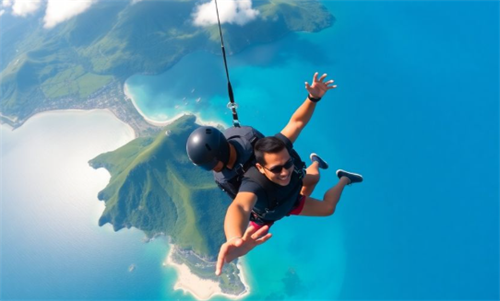
Extreme Sports Travel Checklist: Skydiving, Paragliding, Bungee Jumping – Which One Are You Up For?

International Travel Emergency Guide: How to Handle Unexpected Situations