
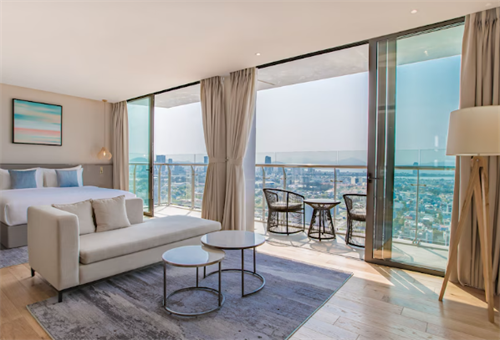
When booking a hotel for a trip, the biggest fear is booking a hotel that doesn't match the description and is a scam.we’ve all been there—booking a “cozy beachfront villa” only to arrive at a tiny room with a view of a parking lot. Over the years, I’ve learned to spot red flags and secure great stays without the hassle. Here are my top tips to avoid hotel booking traps.
1. Prioritize Chains (Or Vet Independent Hotels Hard)
Chain hotels (think Marriott, Hilton, Ibis, or even budget ones like Motel 6) aren’t always exciting, but they’re reliable. Most chains have strict standards for cleanliness, safety, and service—so even a budget chain will rarely be a total disaster. This is especially important if you’re traveling solo (especially solo female travelers) or to a new city—you won’t have to worry about hidden issues like broken locks or unsanitary rooms.
If you love independent hotels or Airbnbs (I do too!), vet them thoroughly:
Check recent reviews (last 3 months). Old reviews (1+ year) might not reflect current conditions—hotels can go from great to terrible fast if they cut corners.
Look for consistent complaints. If 5 people in a row mention “mold in the bathroom” or “no hot water,” believe them—it’s not a one-off.
Message the host/hotel directly. Ask specific questions: “Is the ‘ocean view’ from every room, or just some?” “Do you have a 24-hour front desk?” A responsive host is a good sign—if they ignore your questions, skip them.
2. Location Matters More Than “Cheap Prices”
A $50/night hotel might seem like a steal—until you realize it’s 45 minutes from the city center, and a taxi there costs $30 each way. Suddenly, that “cheap” hotel is more expensive than a $80/night one in a central area.
Here’s how to pick the right location:
-If you’re not driving: Choose a hotel within a 10-minute walk of a subway, bus stop, or train station. Use Google Maps to check—type your hotel address and see how far it is from major attractions or transit. For example, in Tokyo, staying near a JR line station (like Shibuya or Shinjuku) will save you hours of commuting.
-If you are driving: Check for free parking (many hotels charge $20–$50/night for parking, which adds up!). Also, make sure the hotel is near highways or main roads—avoid remote areas if you’re arriving late at night.
-Avoid “tourist traps”: Hotels right next to popular landmarks (e.g., the Eiffel Tower, Times Square) are often overpriced and noisy. Stay 1–2 neighborhoods away—you’ll pay less, and you’ll get a more authentic feel for the city. In Paris, I stayed in Le Marais (a 15-minute walk from the Louvre) instead of near the Eiffel Tower—and saved 30% on my hotel bill.

3. Read the Fine Print (Especially Cancellation Policies)
Life happens—flights get delayed, plans change, or you just find a better hotel. The last thing you want is to lose your money because you booked a “non-refundable” room.
Here’s what to look for:
-Free Cancellation Within 24–48 Hours: The New Gold Standard in Travel.Most reputable hotels offer this, even budget ones.
-“Partial refund” vs. “no refund”: Some hotels say “free cancellation up to 7 days before, 50% refund 3–6 days before”—only book this if you’re 100% sure your plans won’t change.
-Hidden fees: Some hotels charge a “resort fee” ($10–$30/night) or “city tax” (common in Europe, $1–$5/person/night) that’s not included in the initial price. Always check the “total price” (not just the base fare) before booking. I once booked a hotel in Las Vegas that looked like $80/night—turns out there was a $35 resort fee, making it $115/night. Lesson learned.
4. Inspect Photos (And Don’t Trust the Hotel’s Website)
Hotel websites are designed to make rooms look bigger, brighter, and cleaner than they are. Those “spacious suites” might be tiny, and that “luxury bathroom” could have mold in the corners.
Here’s how to see the real deal:
-Look at guest photos, not hotel photos: Sites like Booking.com, TripAdvisor, and Google Reviews let guests upload photos. These are usually unfiltered—you’ll see the actual size of the room, the condition of the furniture, and even the view.
-Zoom in on bathrooms and beds: The bathroom is a good indicator of overall cleanliness. If guest photos show a dirty shower curtain, stained sink, or broken fixtures, skip the hotel. Also, check the bed—if the sheets look thin or the mattress saggy, you won’t sleep well.
-The Truth About Hotel Views: Tips to Avoid Disappointment.I once booked a “beach view” hotel in Thailand—turns out my room faced a wall. The hotel said “some rooms have beach views”—but they didn’t tell me I’d have to pay extra for one.
5. Newer Isn’t Always Better (But “Recently Renovated” Is)
A hotel built in 2020 might be great, but a hotel built in 1990 that was renovated in 2022 can be just as nice—and cheaper. Old hotels often have more character (think hardwood floors or historic architecture) if they’re well-maintained.
Here’s how to tell:
Check the “renovation date” (most booking sites list this). If it’s within the last 3–5 years, the rooms, bathrooms, and amenities (like Wi-Fi or air conditioning) are probably in good shape.
Avoid hotels that say “last renovated in 2010 or earlier”—chances are, the furniture is worn, the Wi-Fi is spotty, and the bathroom fixtures are outdated. When ‘Charming’ Means Run-Down: Lessons from a Roman Hotel Stay. Never again.
6. For International Stays: Use Hotel Loyalty Programs (Or Local Apps)
If you travel often, sign up for a hotel loyalty program (like Marriott Bonvoy, Hilton Honors, or IHG Rewards). You’ll get perks like free Wi-Fi, late checkout, and points that you can redeem for free nights. For example, I’ve stayed in 5 free Hilton nights in Europe just by using my points from business trips.
For international trips (especially in Asia), use local booking apps—they often have better deals than global sites. In Japan, I use Jalan or Rakuten Travel; in Southeast Asia, Agoda (which is based in Singapore) often has lower prices than Booking.com Just make sure the app has an English version and secure payment options.
7. A Quick Call Can Save the Day
If you have specific needs—a quiet room away from the elevator, a firm pillow, a question about parking—just call the hotel. Speaking directly with the front desk staff can give you a much better feel for the place than any online description and they can often note your requests to make your stay better.
8. Go Beyond the Booking Giants
While Booking.com and Expedia are great for comparisons, don’t forget to:
-Check the Hotel’s Own Website: Often, hotels offer their best rates, free breakfast, or room upgrades if you book directly. It’s always worth a quick look.
-Consider Alternative Stays: Airbnb and Vrbo are obvious choices for more space, but also look at serviced apartments or boutique hotels for a more unique experience.
If a hotel deal looks suspicious (like a $40/night “5-star” in a big city), it likely is. Mixed reviews, strict cancellation rules, or questionable photos are all red flags—better to skip it.There are plenty of great hotels out there, and taking an extra 10 minutes to vet your choice will save you from a nightmare stay.
Recommend:

Diving Beginner's Manual: Explore the Blue Poison of Palau and Sipadan Together

World-Class Hiking Routes for Beginners to Professionals

How to Dress Stylishly for Travel: 10 Years of Insights Shared
What type of photographic equipment has a higher rate of retaining its value?